What if young people had a more active role in shaping the neighbourhoods they live in?
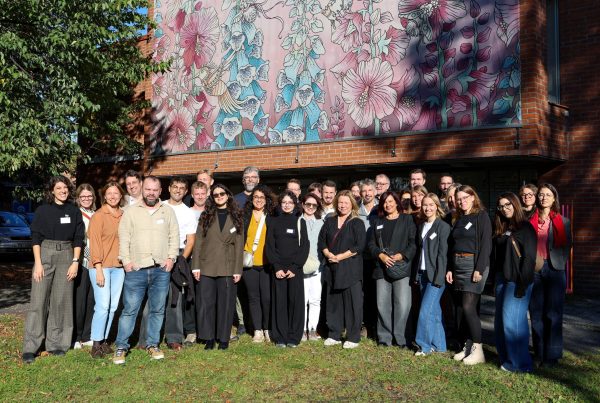
From 16–20 September 2026, 30 young people came together in Nicosia for the Y-PLAN Youth Urban Activation Camp, five days of learning, co-creation and hands-on experimentation focused on making neighbourhoods more inclusive, accessible and people-centred.
Taking place in Agioi Omologites, the YouthCamp transformed the neighbourhood into a living learning environment where participants could observe local challenges, engage with public space and test their own ideas directly in the community.
Y-PLAN – Youth for Participatory and Localized Action in Neighborhoods – is an Erasmus+ project implemented by partners in Cyprus, Greece, Serbia and Belgium. The project aims to strengthen young people’s capacity to participate meaningfully in urban planning and local decision-making, while creating more participatory ways for communities to understand and shape their neighbourhoods.
From understanding the neighbourhood to testing ideas
The YouthCamp followed a simple journey:
Understand → Engage → Co-design → Test → Activate → Reflect.
Participants began by exploring participatory urban planning, youth participation and different ways of reading the city. They then took those ideas into the neighbourhood through mapping, observation and exploratory walks, looking more closely at how people move, gather and interact with public space.
Over the following days, participants moved into problem framing, ideation and prototyping, working in teams around themes such as accessibility, mobility, public space, neighbourhood identity, intergenerational engagement and community life.
The objective was not only to learn about participatory planning, but to put it into practice.
Bringing ideas into the streets

The week culminated in the Laou Laou neighbourhood activation on 20 September, where participants brought their prototypes into the streets of Agioi Omologites and invited the wider community to take part.
The activation brought these ideas to life through a series of playful, creative and participatory interventions. Children were invited to imagine their ideal public space through “Through Kids’ Lenses: My Ideal Park” and Stencil Your Way, while the Accessibility Treasure Hunt encouraged people to look more closely at ramps, crossings, pavements, rest areas and other features that shape how inclusive a neighbourhood really is.
Other activities focused on local identity and memory. Door Bingo turned the neighbourhood’s doors, tiles, handles and architectural details into an urban discovery game, while Ride Through Memory used archival photographs to explore how cycling in Nicosia evolved as the city became increasingly car-oriented.
Elsewhere, participants created opportunities for people to interact with the neighbourhood and with each other in unexpected ways. A collective weaving activity grew throughout the day as passers-by added fabric to a shared artwork, while a travelling interactive book moved from person to person. A neighbourhood radio and DJ booth gathered sounds, stories and perspectives around the past, present and future of Agioi Omologites, while a street dance intervention used movement to question the relationship between people, cars and the street.
Participants also challenged how public space is allocated and used. One team transformed the footprint of a single parking space into a miniature cardboard neighbourhood and children’s play area, making visible how much urban space is normally dedicated to cars. Another developed a participatory bench-making activity, inviting residents to draw and write in response to a simple question: “Why do we need a bench?”
Together, these interventions showed how relatively small experiments can help people experience familiar streets differently, start conversations and imagine new possibilities for neighbourhood life.
From one YouthCamp to local action across Europe
The YouthCamp marks an important milestone for Y-PLAN, but it is only one step in a wider process.
The methodology tested in Nicosia will now be adapted and implemented across Cyprus, Greece, Serbia and Belgium, bringing young people and local stakeholders together to explore neighbourhood challenges and co-create potential responses.
The next phase will include 32 co-creation workshops across the four partner countries, contributing to the development of four neighbourhood plans and a series of locally tested urban interventions.
National workshops are expected to run from November 2026 to March 2027, followed by neighbourhood plans and local interventions during 2027.
The YouthCamp showed what can happen when young people move from being asked for their opinions to being given the tools to observe, create, test and act.
30 young people. Five days. One neighbourhood. And many different ways of asking: what could our streets become?