Could you provide a brief overview of your background and journey? What inspired the creation of TrashTrek, and what milestones have you achieved so far (e.g., app development, community growth, partnerships, international reach, cleanups tracked)?
TrashTrek began when my co-founder Rene noticed how common it is for cigarette butts to be thrown on the ground. As a smoker himself, he became more aware of this habit and how cigarette butts are one of the most frequent types of litter. To address this, he created the TrashTrek Instagram and TikTok profiles and committed to picking up one piece of litter for every new follower.
In just a few months, TrashTrek reached over 90,000 followers across platforms and more than 27,000 pieces of litter collected, with over 2 million views across all platforms. As the community grew, a new idea was born.We thought, why shouldn’t everyone have the opportunity to track their progress, record their cleanups, and connect with others doing the same? That’s how the TrashTrek App was born, a web application that unites individuals, teams, and communities in the fight against pollution.

We are also proud that the TrashTrek App has received formal recognition for its impact. It was awarded the Rector’s Award for Best Social Innovation at the University of Ljubljana, and it won the India–EU Ideathon on Combating Marine Plastic Pollution, organized by the Office of the Principal Scientific Adviser to the Government of India in collaboration with the European Commission.
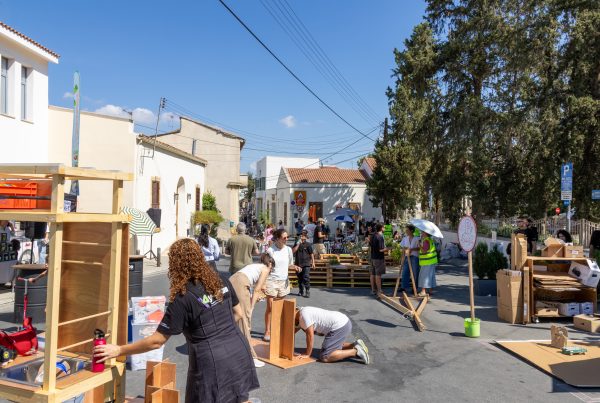
You participated in the EIT Urban Mobility Winter School: Urban Innovators Academy in Cyprus. What motivated you to join the programme, and how has this experience influenced or supported your entrepreneurial journey with TrashTrek App?
The EIT Urban Mobility Winter School in Cyprus emphasized starting with a clear understanding of the need and the challenge, rather than jumping straight into features or solutions. The programme focused on practical work and breaking complex topics into small, workable steps.
This approach helped us when creating the TrashTrek App. It guided us to first understand the problem and our community, and only then focus on solutions. By validating ideas early and gathering feedback, we were able to shape the app around users.

Could you walk us through how the TrashTrek App works? What are the main features, and how do they benefit individuals, volunteer groups, and local communities taking part in cleanups?
TrashTrek App connects people who want to contribute to a cleaner environment.
Users can report littered locations or share their own cleanups. Each cleanup can be documented with before-and-after photos, and all reported locations and completed cleanups are shown on a shared map.
A key advantage of the TrashTrek app is gamification. Collected waste is converted into points, which users can use for small rewards.Our next step is to strengthen the community aspect of the app, allowing people to organize group cleanups. The goal is to make litter picking fun for everyone.
Waste pollution and improper disposal are major environmental challenges in both urban and natural areas. How does TrashTrek contribute to reducing litter, raising awareness, and motivating community-powered cleanups?
TrashTrek ensures that actions for a cleaner environment do not go unnoticed. It gives individuals a sense of responsibility and shows them that their efforts matter, while also connecting them to a wider community working toward the same goal.
By making cleanups visible and shared, TrashTrek raises awareness that littering is a collective problem and that everyone plays a role. The core idea is to show that even small actions, when repeated and done together, can lead to meaningful change. This awareness helps motivate people to take action and supports community-powered cleanups with the long-term aim of reducing littering altogether.
What technologies power TrashTrek (e.g., geo-mapping, data logging, impact tracking, digital communities), and how do they enhance accuracy, transparency, and the overall user experience?
TrashTrek is built as a web-based platform that combines geo-mapping, data logging, and community features to make cleanup activity clear and transparent.
Geo-mapping is used to show littered spots and completed cleanups, helping people see where action is needed and where progress has already been made, without exposing sensitive or exact locations.
Data logging allows users to record cleanups, including the amount and types of litter collected. We are also partnering with research institutions to support more detailed and structured data collection related to litter and pollution.
In addition, TrashTrek uses gamification to motivate participation. This includes leaderboards and a rewards system called TrashPass, a common approach in the gaming industry where rewards are unlocked based on the impact users create. We are also working toward partnerships with local companies to offer tangible rewards.
Building a community-driven environmental solution often comes with challenges. What have been some of the biggest obstacles in developing and scaling TrashTrek, and how did you overcome them?
One of the biggest challenges has been turning awareness into sustained participation. While TrashTrek’s social media content inspired many people to take action, as seen in comments from users saying the videos motivated them to go out and clean, turning that inspiration into regular engagement on the app is more difficult.

The challenge starts after the first action. Building a community means keeping people engaged and coming back, not just inspiring them once. This was also what drove the idea behind the TrashTrek App.
This remains an ongoing challenge. Our key focus is listening closely to users and improving the app based on their feedback. By strengthening the community aspect and working more closely with local partners and groups, we aim to help people clean together and feel more connected.

TrashTrek has already grown into a multi-country movement with users tracking thousands of pieces of litter collected. What impact or community stories are you most proud of so far?
What we are most proud of is the response from the community. Rene regularly receives messages from people saying they picked up trash for the first time because of TrashTrek. Others share their own cleanups, tag TrashTrek from different countries, and comment that they never realized how serious the littering problem was.
We are also proud that cleanup has become something people feel comfortable and even proud to share. That is why every post shared through the TrashTrek app matters to us. Each one shows that taking action is becoming normal.
We are also proud of how quickly we moved from idea to practice. We built and launched the TrashTrek App in 11 days, shared it with the community, and immediately started learning from early user feedback.
Looking ahead, what’s next for TrashTrek? Are there any upcoming features, partnerships, expansions, or new tools you plan to introduce to strengthen the platform and its environmental impact?
Our focus is on strengthening the platform through collaboration and localization. After winning the India–EU Ideathon, we received strong feedback and interest, particularly from India, and we are open to working with local partners to adapt TrashTrek to local communities and needs.
In Slovenia, we have partnered with You(r)Sea and have recently launched a partnership campaign with McDonald’s Slovenia, which is supporting our community by giving away up to 350 McDonald’s points. For us, this is just the beginning, and we are looking forward to giving back to the community and strengthening our impact.

We see the future of TrashTrek App as a collaborative effort built together with others. Creating lasting change requires people, communities, and organizations working side by side. That’s why we invite anyone interested in the TrashTrek App to reach out to us, so we can explore how to create even greater impact together.
Follow TrashTrek’s Journey!
Stay updated on TraskTrek’s progress and exciting developments by visiting their website and connecting with them on social media:
- Website: www.trashtrekapp.com
- Instagram: trashtrek_
- TikTok: trashtrek_
- Youtube: Trashtrek
Get in Touch:
For inquiries, reach out at:
- Email: info@trashtrekapp.com
We hope you enjoyed reading the Alumni Spotlight Series blog and feel inspired by the journeys of our alumni! Stay tuned for our next series, and see you soon!