The Urban Mobility Challenge in Cyprus
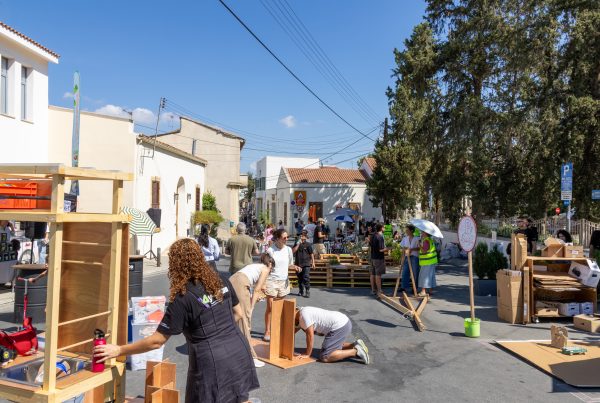
Cyprus faces significant challenges in urban mobility, from car dependency and fragmented infrastructure to a lack of pedestrian-friendly design. Urban planning has historically prioritized vehicles over sustainable and inclusive alternatives, resulting in traffic congestion, underutilized public transport, and limited accessibility for pedestrians and cyclists. Additionally, the exclusion of youth and marginalized communities in mobility planning has further exacerbated these issues.
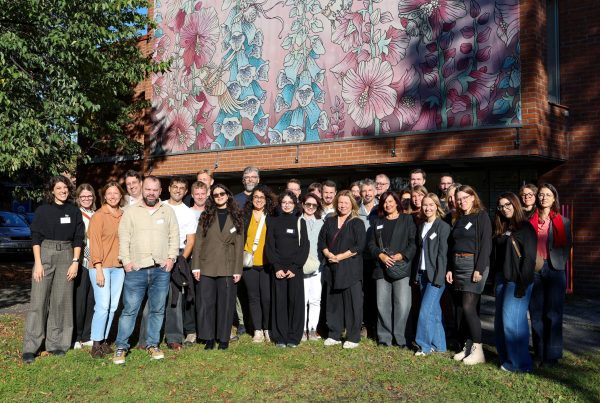
To address these challenges, CyprusInno (powered by SocialTech Lab) partnered with Kimitisik to launch the Urban Innovators Academy, a five-day transformative program held from March 15–20, 2025 in Cyprus, bringing together 40+ students from across Europe to collaboratively develop real-world urban mobility solutions.

Academy Highlights
To equip participants with the tools to develop innovative solutions, the Urban Innovators Academy offered intensive training led by organisers SocialTech Lab and Kimitisik, covering topics like urban mobility fundamentals, rapid ideation, business modeling, value proposition, stakeholder mapping and pitching, providing a strong foundation for co-creating impactful mobility solutions while receiving expert mentorship.

In addition to hands-on training, the academy featured a series of expert presentations and panel discussions, offering deeper insights into urban mobility, planning, and scaleup opportunities in Cyprus.
SURF Lab showcased its use of evidence-based design and planning, while EIT Community RIS Hub Cyprus introduced funding opportunities for mobility projects. NESEI emphasized the role of social entrepreneurship in tackling mobility challenges. The academy also brought together key organizations shaping urban mobility. Opu Collective highlighted its work in fostering urban role models and driving behavioral change through social interventions. MaaSLab explored emerging mobility technologies, including autonomous vehicles, drones, and Mobility as a Service (MaaS), while MobyX shared insights into its digital solutions for sustainable transport planning. Through dynamic discussions and interactive Q&A sessions, participants gained valuable insights into cutting-edge mobility solutions, equipping them with the knowledge and tools to design sustainable urban initiatives.
“The academy emphasised the power of youth-driven innovation and co-creation, inspiring practical solutions that can drive real change for the future of urban mobility in Cyprus.” highlighted the SocialTech Lab Team
A Collaborative Path Forward
The Urban Innovators Academy tackled real-world mobility challenges presented by key local players, including KIOS, SURF Lab, and CYENS. Participants developed solutions addressing critical issues such as designing safe and inclusive travel routes for schoolchildren, empowering citizens with data-driven mobility tools, increasing bicycle usage through digital solutions, and enhancing medical transportation via air mobility routing. Among the proposed solutions were a cycling app offering rewards from local businesses, a carpooling platform for university students, and educational programs to teach children about public transport and road safety.
The expert discussions throughout the program illuminated the path forward for urban mobility in Cyprus, urging a holistic approach that blends sustainability, inclusivity, and innovation. Key insights focused on the importance of integrated urban planning that balances environmental, social, and economic sustainability, while prioritizing human-centered design to create spaces and systems that truly serve communities. It was clear that urban mobility solutions must align seamlessly with existing infrastructures, transforming fragmented systems into interconnected, accessible networks that work for everyone.
In light of Cyprus’ car dependency and the lack of pedestrian-friendly spaces, the need for a shift toward sustainable mobility was emphasized. Optimizing public transport and expanding micromobility options, such as bike lanes and e-scooter zones, were identified as pivotal steps in reducing congestion and promoting cleaner alternatives. Embracing collaboration between municipalities, startups, and NGOs emerged as key to building practical, scalable solutions. The discussions also pointed to the power of community-driven change, particularly through youth empowerment. By fostering a culture of sustainability and encouraging the next generation of mobility advocates, Cyprus can pave the way for a more connected, vibrant, and future-forward urban environment.
The Urban Innovators Academy Cyprus is supported by EIT Urban Mobility, an initiative of the European Institute of Innovation and Technology (EIT), a body of the European Union.